
If you spend time outside in Austin, mosquito bites are part of the deal. Patios, dog walks, evening games, backyard dinners, and outdoor work all put you in the flight path.
That is why mosquito control in Austin matters. Repellents help protect you in the moment, but they work best when you choose the right active ingredient, apply it the right way, and understand what repellent can and cannot do.
For families and businesses, that matters. Nobody wants to plan their whole evening around swatting bugs.
We provide expert mosquito control across Austin, Dripping Springs, Bee Cave, Lakeway, Round Rock, Buda, and Kyle. Protect your home today!
Why personal protection matters in Austin
Mosquitoes are not just annoying. The Austin Public Health bite-prevention toolkit continues to tell residents to use repellent, dress to reduce bites, and remove standing water during mosquito season.
That guidance fits Austin life. People here actually use their outdoor spaces. Kids play outside. Dogs go in and out. Customers sit on patios. Employees walk between buildings. A good repellent can make that easier, especially when mosquito pressure spikes after rain.
The main repellent ingredients people should know
You do not need to memorize a chemistry chart, but it helps to know the names that actually matter.
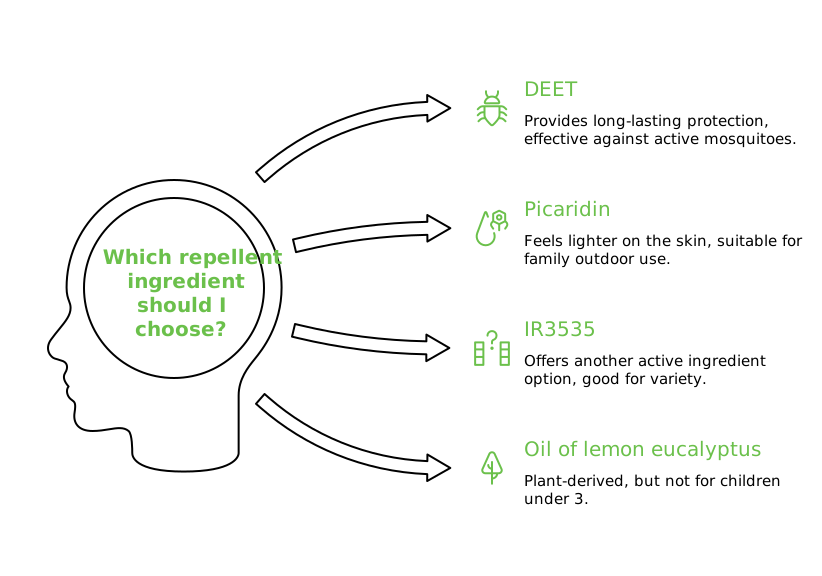
The EPA repellent ingredient guide includes DEET, picaridin, IR3535, and oil of lemon eucalyptus as recognized skin-applied repellent ingredients. Those are the names worth looking for on the label.
DEET
DEET has been a go-to option for a long time because it works well when mosquitoes are active and you need several hours of protection. The CDC traveler guidance says products with 20% or more DEET can provide protection for several hours.
Picaridin
Picaridin is another strong option and is often popular with people who want something that feels lighter on the skin. It sits in the same group of commonly recommended repellent actives and is easy to find in products made for family outdoor use.
IR3535
IR3535 is also on the list of EPA-recognized repellent ingredients. It gives people another option when comparing labels, especially if they want more than one active ingredient choice at the store.
Oil of lemon eucalyptus
Oil of lemon eucalyptus, also called OLE or PMD in some product information, gets attention because it is plant-derived. The HealthyChildren.org repellent guidance says OLE should not be used on children younger than 3.
How long repellents last
This is where a lot of confusion starts. People often think a higher percentage means the repellent is “stronger.” Usually, it is more accurate to say it lasts longer.
The HealthyChildren.org guidance explains that higher concentrations of DEET increase how long the product lasts, not how much it repels at one time.
That matters in Austin because heat, sweat, and time outside can shorten how long a product feels effective. If you are walking the dog for 20 minutes, you may not need the same setup as someone sitting outside through a whole evening event.
The label still decides how often a product should be reapplied. Do not guess. Read it.
How to apply mosquito repellent the right way
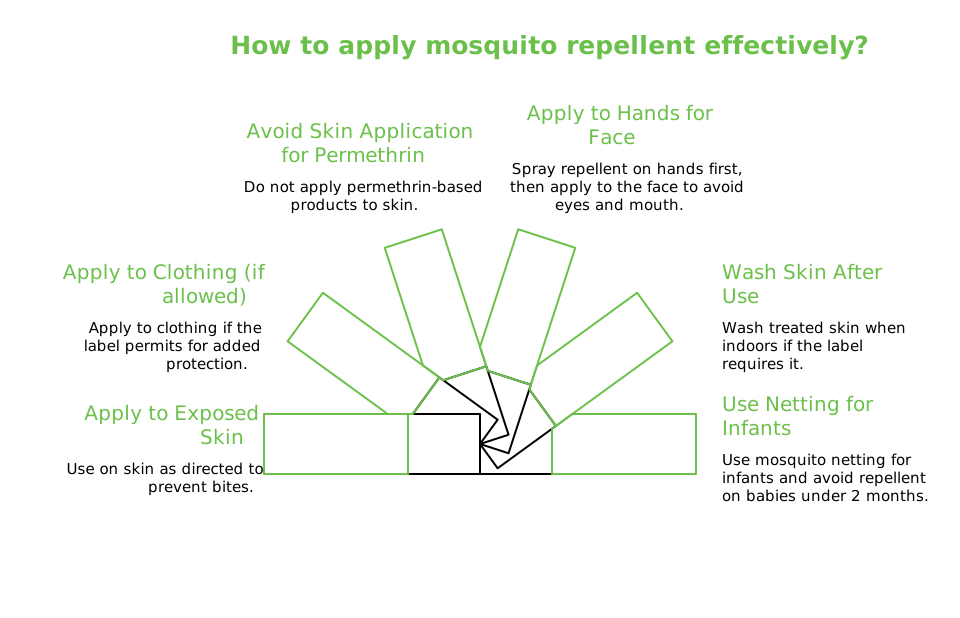
Good repellent can still disappoint if you use it wrong.
Use it on exposed skin as directed. If the label allows, some products can also be applied to clothing. Just remember that not every mosquito-control product is for skin. The CDC outdoor worker guidance separates skin repellents from permethrin-treated clothing and gear, because permethrin is for clothing and equipment, not for skin.
A few basics go a long way:
- Apply only as directed on the label.
- Put repellent on exposed skin, not under clothing.
- For the face, spray on your hands first, then apply carefully.
- Keep it away from eyes and mouth.
- Wash treated skin when you come back inside if the label calls for it.
For children, the rules matter even more. The CDC family travel guidance says mosquito netting can help protect infants, and repellent should not be used on babies younger than 2 months.
Personal protection is more than a bottle
Repellent is important, but it is not the whole plan.
Long sleeves, longer pants, closed doors, window screens, and a little timing can all help reduce bites. If mosquitoes are worst at a certain hour on your property, it helps to know that before you set up dinner outside or schedule work near dusk.
And yes, standing water still matters. No repellent fixes a property that keeps giving mosquitoes places to breed.
What repellent can and cannot do
Repellent protects the person wearing it. It does not clear the whole yard.
That means you can still do everything right and have mosquitoes hovering around the patio, entryway, dog run, or business exterior. Repellent helps you manage bites. It does not solve the full mosquito population around a property.
That is the part a lot of people do not hear until they are on their third bottle and still getting chased inside.
When professional mosquito control makes more sense
If you are using repellent every time you step outside and the space is still miserable, the problem is probably bigger than personal protection can handle.
That is often the case with:
- yards that stay damp or shaded
- patios used in the evening
- commercial spaces with outdoor seating
- apartment or multi-family common areas
- properties near repeat breeding spots
A professional mosquito plan looks at the whole property, not just the person getting bitten. That is where BrockStar can help. We provide mosquito control in Austin as one of our core services for both residential and commercial properties in Austin and surrounding areas.
See what our happy customers are saying! Read real reviews and discover why homeowners trust us.
Need more than repellent?
If personal protection is not enough, take a look at BrockStar’s mosquito control in Austin to see how a professional plan can help make outdoor spaces more usable again.
FAQ
1. What mosquito repellent works best in Austin?
The best repellent is usually one with a proven active ingredient like DEET, picaridin, IR3535, or oil of lemon eucalyptus, used the way the label says. The right choice often depends on who is using it, how long they will be outside, and whether the activity is a quick walk or a long evening outdoors.
2. Is DEET better than picaridin?
Not always. DEET is widely trusted and can last for hours, while picaridin is also a strong option that many people like because it feels lighter on the skin. In practice, the better choice is often the one you will use correctly and consistently.
3. Can kids use mosquito repellent safely?
Yes, but the age rules and label directions matter. For example, repellents should not be used on babies younger than 2 months, and oil of lemon eucalyptus should not be used on children under 3.
4. How often should I reapply mosquito repellent?
Follow the product label, because wear time depends on the active ingredient, concentration, sweat, heat, and how long you stay outside. In Austin weather, long evenings outdoors can shorten how long repellent feels effective.
5. Does BrockStar offer mosquito control for homes and businesses in Austin?
Yes. We serve both residential and commercial properties in Austin and surrounding areas, and mosquito control is one of our main service lines. That makes us a fit for households, business patios, and shared outdoor spaces that need more than personal repellent use.