If your backyard still feels like mosquito heaven after sprays, dunks, or DIY cleanup, you’re not imagining things. Mosquito Control in Austin can get stubborn fast because the problem is often bigger than one puddle or one bad week. According to the City of Austin’s mosquito prevention guide, mosquitoes are active year-round in Central Texas, and even small pockets of standing water can keep the cycle going.
We provide expert mosquito control across Austin, Dripping Springs, Bee Cave, Lakeway, Round Rock, Buda, and Kyle. Protect your home today!
Why mosquitoes keep coming back
Most repeat mosquito trouble comes down to one simple truth: you knocked down some of the problem, but not the part that keeps reloading the yard. That could be hidden breeding water, thick shady areas where adults rest during the day, or fresh rain that refills containers you forgot were even there.
The fix starts with a real inspection, not guesswork. When you know where mosquitoes are breeding and where they’re hiding, the next step gets a whole lot clearer.
The five biggest reasons mosquitoes won’t go away
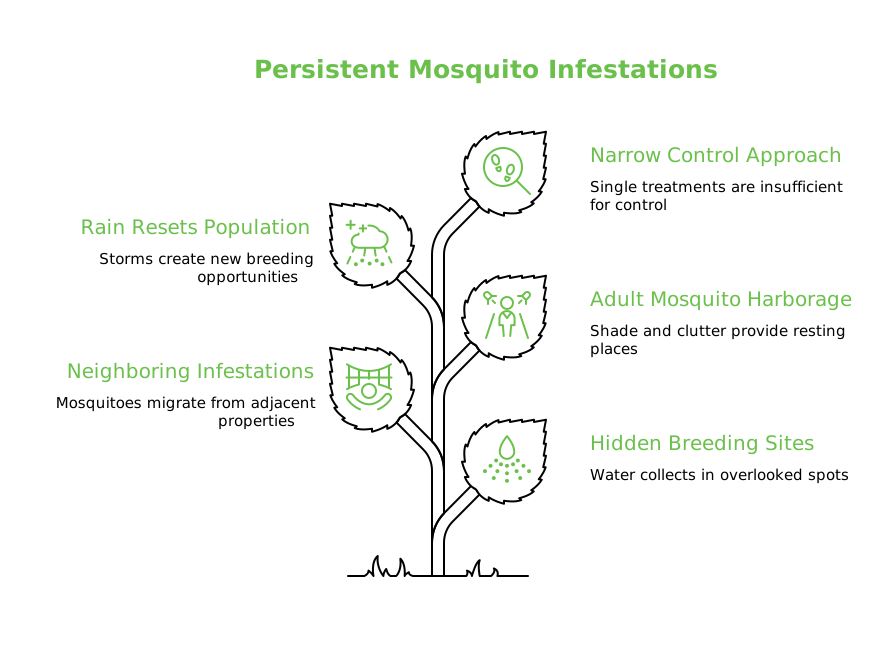
1. Hidden breeding sites are still on the property
Mosquitoes do not need a pond to take over a yard. A clogged gutter, a plant saucer, a toy bin, a corrugated drain pipe, or a low spot near the fence can do the job just fine. The U.S. Environmental Protection Agency explains in its integrated mosquito control guidance that old tires, buckets, plastic covers, toys, rain gutters, and other water-holding spots around a home are common breeding places.
That is why a dry-looking yard can still have a mosquito problem. Water may be tucked under leaves, inside clutter, or in spots you only notice a day or two after rain.
2. The next yard may be feeding your problem
You can do a solid cleanup and still keep getting bit if mosquitoes are coming from a fence line, a drainage edge, a nearby vacant lot, or a neighbor’s containers. This is one reason mosquito problems feel so aggravating. Sometimes the source is not centered in the exact spot where you feel the bites.
That does not mean your own yard gets a free pass. It means your audit should include what is happening just beyond your fence, especially along shared drainage paths and shaded edges.
3. Shade and harborage give adult mosquitoes a place to hang out
Adult mosquitoes like cool, protected places while they wait for better feeding conditions. The CDC says in its Mosquito Control at Home page that mosquitoes rest in dark, humid areas such as under patio furniture, under a carport, or in other sheltered outdoor spots.
That is why dense shrubs, thick groundcover, cluttered storage corners, ivy, and under-deck voids can keep pressure high even when you have dumped standing water. If the yard gives mosquitoes a comfortable place to hide all day, they are still close by when people head outside.
4. Rain keeps resetting the clock
Austin yards can look fine one day and turn into a mosquito mess right after a storm. Texas A&M AgriLife notes in its post-rain mosquito population article that rain events can drive fast mosquito population jumps, especially when water collects in overlooked containers and landscape features.
That means one cleanup is rarely enough during a wet stretch. You may need to check the same yard again after each round of rain, because new trouble spots show up fast.
5. The yard plan is too narrow
A lot of people try one product, one treatment, or one weekend cleanup and expect the problem to fold. Mosquitoes do not play that game. A peer-reviewed review on source reduction and mosquito ecology found that covering or removing water-holding containers can sharply cut breeding odds, which backs up the idea that control works better when it focuses on the actual breeding sources instead of just chasing adult mosquitoes.
How to run a structured mosquito yard audit
Want to find the real issue? Walk the property in this order.
Start with water
Check the easy stuff first:
- Flowerpot saucers
- Buckets and toys
- Birdbaths
- Trash can lids
- Gutters and downspouts
- Tarps and plastic covers
- Wheelbarrows and outdoor bins
- Pet bowls and decorative containers
Then move to the sneaky stuff:
- Low spots along the fence
- Corrugated drain lines
- AC drainage areas
- Water trapped in thick plants
- Spots under decks or stairs
- Any container sitting behind the shed or side gate
Next, follow the shade line
Look for places that stay cool and still during the day. That includes shrub lines, heavy landscaping, stacked materials, crawlspace edges, and covered patio corners. If a spot feels muggy and protected to you, mosquitoes may like it too.
Then look beyond the fence
Scan nearby yards, drainage swales, creek edges, alley corners, and common areas. You are not trying to pick a fight with the neighbors. You are trying to figure out whether the pressure is local, shared, or being reintroduced from just outside the property line.
Re-check after rain
This is where most people slip up. They inspect when the yard is dry, then wonder why the bites come roaring back. A smart mosquito audit happens again after irrigation or rainfall, when hidden holding spots finally show themselves.
What homeowners and property managers often miss
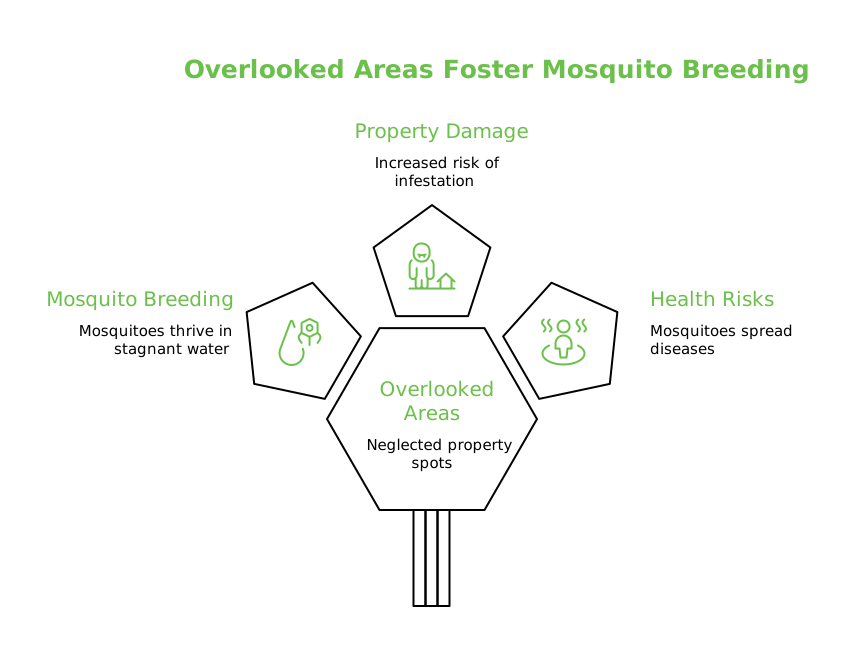
For homes, the usual misses are gutters, potted plants, kids’ toys, storage bins, and shady corners people do not inspect often enough.
For commercial sites, the list gets longer:
- Dumpster pads
- Utility areas
- Mop buckets
- Planters at entries
- Loading zones
- Unused containers behind the building
- Landscape beds that stay damp
The shape of the property matters too. If your home or business has thick landscaping, little airflow, or runoff that pools in the same spots, mosquitoes can stick around longer than people expect.
When DIY steps are not enough
If you have cleaned up standing water, checked after rain, trimmed back heavy harborage, and you are still getting lit up outside, it may be time to bring in a local pro. That is even more true when the yard backs up to heavy vegetation, nearby drainage, or shared mosquito pressure from close properties.
A local service plan can help sort out what is happening on the property, what is coming from the edges, and what needs repeat attention through Austin’s warmer months.
See what our happy customers are saying! Read real reviews and discover why homeowners trust us.
When it’s time to call BrockStar
If your yard audit keeps turning up new mosquito pockets, or the bites never really let up, it may be time for Mosquito Control in Austin that looks at the full picture. BrockStar can help inspect the property, spot the trouble zones, and build a plan that fits your home or business. You can start with BrockStar’s Austin mosquito control page and get a fast next step from a team that knows local mosquito pressure.
FAQ
Why do mosquitoes keep coming back after treatment?
Usually because the source was reduced, not removed. If water keeps collecting or adults still have shaded resting spots, the yard can reload fast.
Can my neighbor’s yard cause my mosquito problem?
Yes, it can add pressure. Shared fence lines, drainage paths, and nearby standing water can keep mosquitoes moving into your space.
Where do mosquitoes hide during the day?
They usually tuck into cool, shaded, humid places. Think dense shrubs, covered patios, storage corners, and other protected spots with little airflow.
How soon after rain should I check my yard?
As soon as it is safe to walk it. That is when hidden water-holding spots are easiest to find before the problem gets rolling again.
When should I call a mosquito pro in Austin?
Call when you have done the basic cleanup, checked after rain, and the bites still keep coming. That usually means the problem is bigger than one easy fix, and a full property inspection makes more sense.