

If you are sizing up a mosquito misting system, you are probably after one thing: fewer mosquitoes without having to think about it every evening.
That is the appeal. These systems can help on the right property. But they are not magic, and they are not the best fit for every yard, patio, business, or apartment community in Austin. For many property owners, mosquito control in Austin works best when a misting system is treated as one tool, not the whole plan.
The smart way to look at a misting system is simple. Know how it works. Know what it covers. Know what it still cannot fix on its own.
Austin Public Health says mosquitoes are present in Central Texas year-round, with the population largest and most active from May through November, which is a big reason Austin property owners start looking at stronger seasonal control options before summer gets rolling (Austin Public Health mosquito guidance).
We provide expert mosquito control across Austin, Dripping Springs, Bee Cave, Lakeway, Round Rock, Buda, and Kyle. Protect your home today!
What a mosquito misting system does
A misting system is an installed setup that sprays a measured insecticide mist through a network of small nozzles placed around outdoor areas. Those nozzles are often mounted along fence lines, roof edges, landscaping, or other spots where mosquitoes hang out.
The Centers for Disease Control and Prevention says misting systems automatically spray insecticides at timed intervals from nozzles installed along house eaves, fencing, or landscaped areas, which makes them a tool aimed mostly at adult mosquitoes resting around the property (CDC misting systems overview).
That last part matters. A misting system can help lower biting pressure in outdoor spaces, but it does not remove standing water, fix drainage trouble, or clean up hidden breeding spots by itself.
Main parts of a mosquito misting system
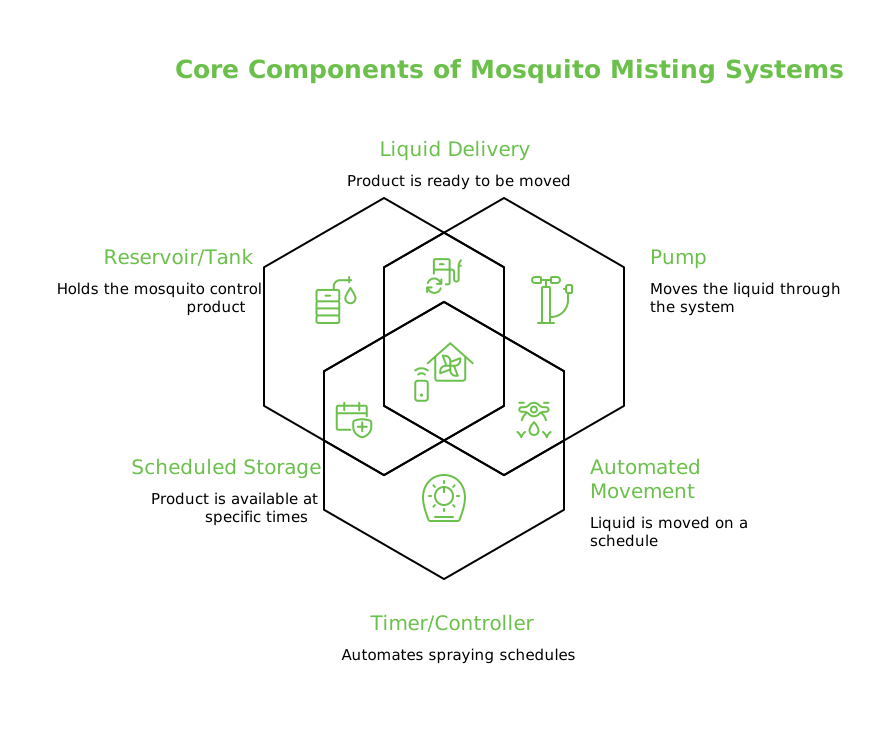
Most systems have the same basic pieces:
- a reservoir or tank that holds the product
- a pump that moves the liquid
- a timer or controller that tells the system when to spray
- tubing that carries the product around the property
- nozzles that release the mist into target zones
Some setups are simple. Some are more customized. Larger homes, restaurant patios, and multi-family outdoor spaces usually need more planning than a small backyard.
How coverage planning usually works
This is where a lot of people get tripped up. Coverage is not just about square footage. It is about where mosquitoes rest and where people actually spend time outside.
Shady fence lines, dense landscaping, covered patios, breezeways, and humid corners usually matter more than open sunny lawn. A well-planned system focuses on those resting zones instead of trying to blanket every inch of the property.
That is also why misting systems can make more sense on some properties than others. A yard with thick landscaping and several outdoor living areas may get more use from a system than a wide-open lot with very little shade.
Chemical options: what people usually mean by that
When people ask about chemical options, they are usually asking what active ingredients are used and how those products differ.
The National Pesticide Information Center explains that pyrethrins come from chrysanthemum flowers and that pyrethroids are man-made chemicals designed to act like pyrethrins, which is why those names show up often in mosquito control product discussions (NPIC pyrethrins fact sheet).
That does not mean one label fits every system or every property. The product, the dilution, the spray timing, and the use site all have to match the label tied to that system and that application.
Why the label and setup matter
This is the part many buyers skip past too fast.
The U.S. Environmental Protection Agency says outdoor residential misting systems are designed to spray pesticides in a fine mist through nozzles mounted around a home, lawn, landscaping, house, or fence, and it stresses that consumers should check that both the pesticide and the equipment are registered and used according to label directions (EPA mosquito misting systems fact sheet).
In plain English, the hardware is only half the story. The real-world result depends on smart placement, the right product, and a setup that matches the property.
Maintenance: the part owners often underestimate
A misting system is not a set-it-and-forget-it gadget.
Nozzles can clog. Tubing can leak. Spray direction can drift. Tanks need refilling. Timers need checking. Landscaping changes can block coverage. If the system is not maintained, performance can drop fast.
That is one reason these systems are a better fit for owners who want steady upkeep, not just installation.
Pros and cons of mosquito misting systems
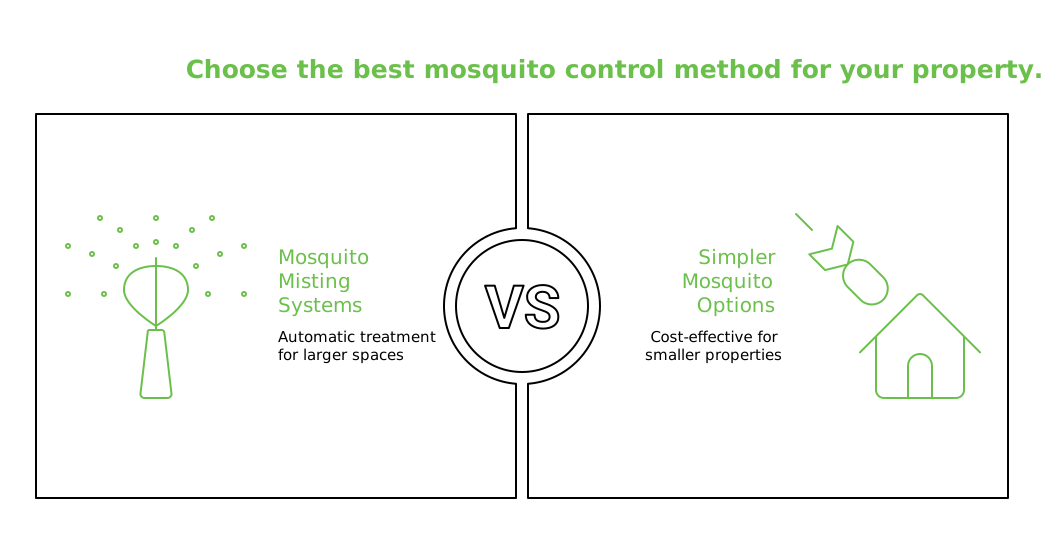
Here is the plain version.
Pros
- automatic treatment on a schedule
- helpful for some larger or more landscaped outdoor spaces
- can lower adult mosquito pressure in places where people gather outside often
Cons
- higher upfront cost than simpler mosquito options
- ongoing maintenance and product refills
- does not remove breeding water on its own
- not always the best fit for smaller or simpler properties
A good misting system can be handy. It is just not the answer to every mosquito problem.
How misting systems compare to other mosquito control methods
Texas A&M AgriLife says the first step in any mosquito control effort is to find and eliminate breeding sites, which is a good reminder that even a strong misting system works better when the property is not full of standing water in the first place (Texas A&M AgriLife mosquito control guide).
That is why misting systems usually make the most sense when they are paired with basic source reduction, routine property checks, and a plan for problem spots that keep holding water.
For some Austin properties, a misting system may be the right call. For others, a simpler setup, regular service, or cleanup-focused plan may do the job with less equipment and less upkeep.
Is a misting system a good fit for your Austin property?
It may be a good fit if:
- you have several shaded outdoor living areas
- mosquitoes are a steady issue around landscaping or fence lines
- the property has enough complexity to justify installed equipment
- you are willing to keep up with service and maintenance
It may be a poor fit if:
- the yard is small and open
- the main issue is standing water that has not been handled yet
- you want a one-time fix with no upkeep
- the layout changes often or does not have clear target zones
That balanced view is the honest one. Misting systems can help. They just work best when the property and the expectations both match the tool.
See what our happy customers are saying! Read real reviews and discover why homeowners trust us.
BrockStar Mosquito Control in Austin
Need help sorting out whether a mosquito misting system makes sense for your place? BrockStar Mosquito Control in Austin helps homeowners, businesses, HOAs, and property managers figure out what fits the property best. Sometimes that may be a misting setup. Sometimes it may be a different mosquito plan that is easier to manage. Either way, the goal stays the same: keep it local, keep it practical, and help you enjoy your outdoor space without getting chewed up.
FAQ
How long does a mosquito misting system last?
The hardware can last for years when it is installed well and kept up on a regular schedule. The bigger question is not just lifespan, but whether the nozzles, tubing, timer, and product supply are being checked often enough to keep the system working the way it should.
Do mosquito misting systems work on all properties?
No. They tend to make more sense on properties with shaded resting areas, landscaping, or outdoor living zones that see steady mosquito pressure. Small, open yards may not get the same value from installed equipment.
What chemicals are usually used in mosquito misting systems?
Many discussions around misting systems center on pyrethrins or pyrethroid-type products. The right choice depends on the label, the system, the use site, and how the property is being managed as a whole.
How much maintenance does a misting system need?
More than many owners expect. Tanks need refilling, settings need checking, and nozzles and tubing need routine attention so the spray pattern stays on target.
Is a misting system better than regular mosquito treatment?
Not always. For some properties, installed misting is a strong fit. For others, regular service visits, source reduction, or a simpler mosquito plan may be easier to manage and plenty effective for the space.